


Root canals are classified according to the number of canals in the root of the tooth. Not all of our teeth are the same on the inside, and the number of roots varies from one to another, and with it the number of root canals. Depending on the number of root canals, endodontics can be classified in three different ways.
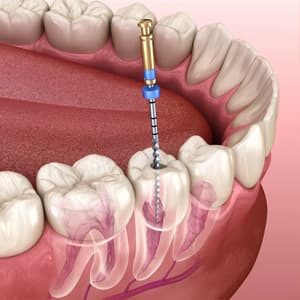
As the name suggests, this is the endodontic procedure for teeth with a single root canal. These are the incisors (both central and lateral), upper and lower canines and first and second premolars of the lower dentition.
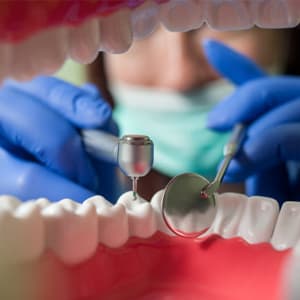
In this case, the intervention is performed on teeth with two root canals, such as the upper second premolars.
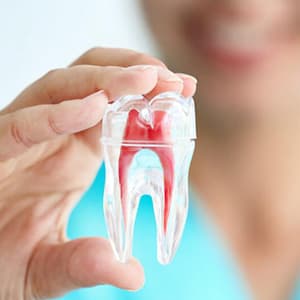
When the tooth has more than two root canals, this endodontic treatment is performed. This occurs in upper molars, in which each root usually has two canals and, taking into account that molars have two roots, we would usually find a total of four canals.
Endodontics is a key treatment for eliminating pain, stopping infections and preserving damaged teeth without the need to extract them. It is adapted to each tooth according to the number of canals and allows the functionality of the tooth to be restored in a safe, effective and lasting way when the nerve is affected.
It is a treatment that removes the damaged pulp from the tooth and seals its canals.
When there is persistent pain, infection or deep dental nerve damage.
No, it is performed under local anaesthesia and is a painless procedure.
Yes, it preserves the tooth and restores its normal function.